Outgoing

STARTS HERE!








+48 32 295 93 16
gweglarz@wsb.edu.pl
-
 Types of Mobility within the Erasmus+ Programme
- Study Mobility (SMS) – the most popular form of mobility, allowing students to complete part of their studies at a partner higher education institution abroad for a period ranging from 2 to 12 months.
- Traineeship Mobility (SMT) – an opportunity to undertake a professional traineeship or internship at a foreign institution, company, or organization for a period ranging from 2 to 12 months.
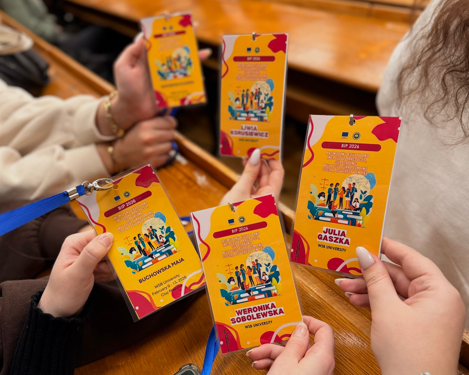
- Blended Mobility (Blended Intensive Programmes – BIPs) – a combination of physical mobility and a virtual component, providing greater flexibility and accessibility. These programmes typically involve a short period of physical mobility lasting from 5 to 30 days, complemented by online collaborative learning activities.
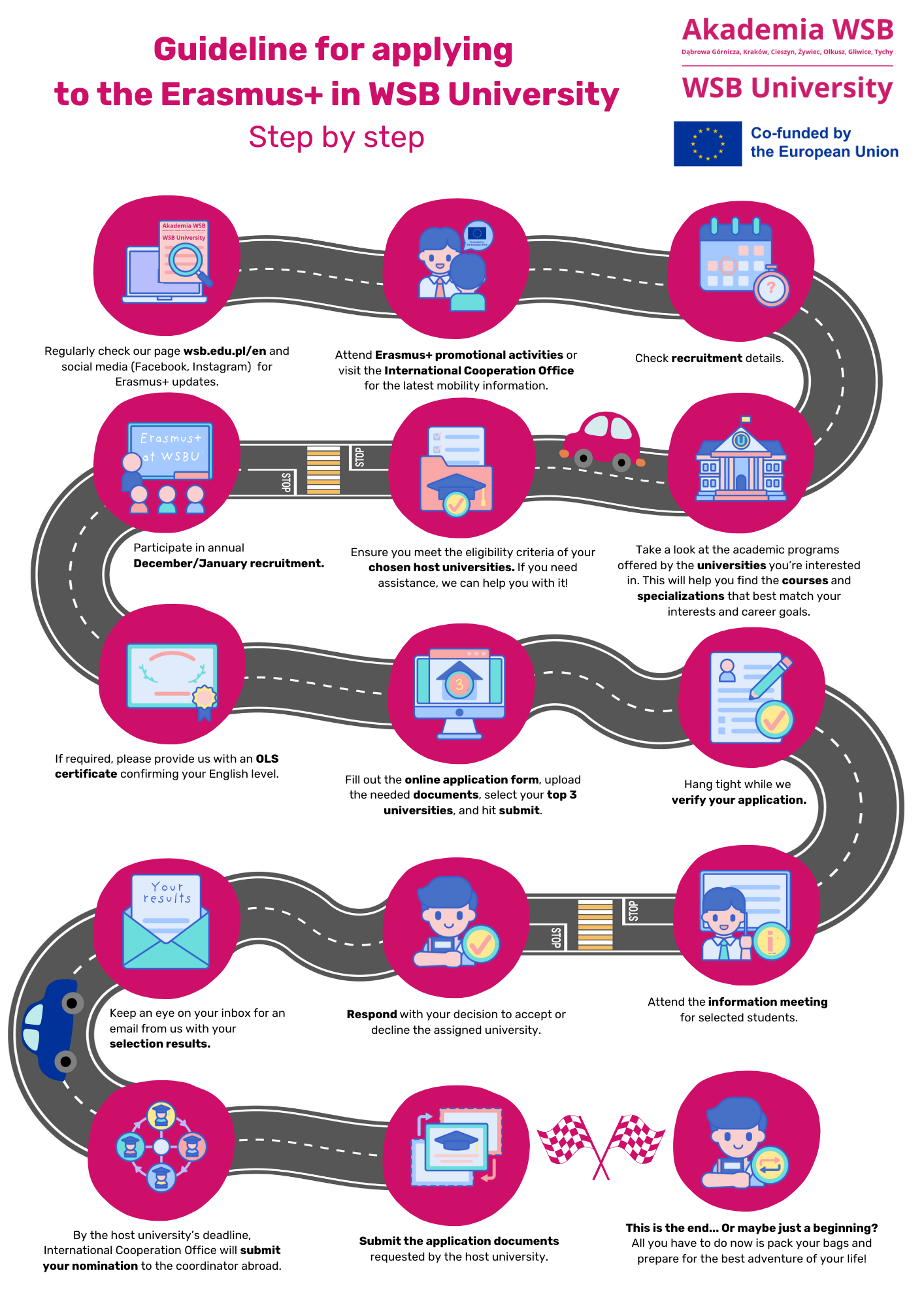
In the case of selection, please make sure to review the Erasmus Charter for Students and follow the steps outlined below.
Duration of mobility
- A long-term study mobility can last from a minimum of 2 months up to a maximum of 12 months.
- A short-term study mobility (i.e. BIP) can last from a minimum of 5 to a maximum of 30 days.
- A traineeship mobility can last from a minimum of 2 months up to a maximum of 12 months.
Whether you're a student or trainee, you can benefit from Erasmus+ exchanges multiple times. Keep in mind that your total time abroad, including study periods, shouldn't exceed 12 months within one study cycle.
In the case of students transferring to study at WSB University from another university who have made mobility within the framework of the Erasmus+ program in the previous university, mobility periods accumulate.
Alumni traineeship mobility
The traineeship is dedicated for recent graduates who applied for mobility as students before BA/MA defense.
- The application is valid for 12 months from the date of defense.
- The Learning Agreement must be signed and approved by all parties before your thesis defense.
Alumni mobility cannot be combined with traineeship mobility. This means that if you are completing a traineeship during your final semester and wish to extend it after graduation, it will not be possible under the same program. Alumni mobility is a separate category with its own requirements and a different set of documents.
Destination of mobility
Study mobility can be done only in one of the WSBU partner universities listed below:
Traineeship mobility can be done in a company/institution of your choice located in EU member country and third countries associated to the program.
Erasmus+ traineeship cannot be realized in:
• EU institutions,
• managing authorities of EU programmes,
• diplomatic missions in the student's home country.- The scholarship under the Erasmus+ program is of a co-financing nature, so it does not have to cover the full costs associated with the mobility.
- The Erasmus experience focuses on the diversifying the students' life. In such, the students from the same language region are not advised to proceed with their Erasmus+ mobility in the country of similar background.
-
Recruitment Regulations for Akademia WSB Students Participating in the Erasmus+ Programme
§1. General Provisions
These regulations define the rules and procedures for the recruitment of Akademia WSB students for Erasmus+ mobility activities. The recruitment process is conducted in accordance with the principles of transparency, equal treatment, and non-discrimination. Information regarding the call for applications is published on the University's website, social media channels, and distributed via email.§2. Recruitment Schedule
15 June – 15 July 2026 – submission of online application forms
20–24 July 2026 – formal verification of applications
27 July – 7 August 2026 – online interviews
Recruitment results will be published within 14 days after the completion of the recruitment process.
§3. Types of Mobility
The recruitment covers:Long-term study mobilities,
Short-term study mobilities (BIPs – Blended Intensive Programmes),
Long-term traineeship mobilities,
as specified in the recruitment announcement.§4. Eligibility Criteria
Applicants must:- hold student status at Akademia WSB,
- meet the formal requirements, including being enrolled in at least the second semester of first-cycle studies or the first semester of second-cycle studies at the time of application,
- submit a complete application within the specified deadline.
Students may submit only one application for one type of mobility.At the time of application, students may have no more than one conditional course pass (academic condition).
Students who:
- have more than one conditional course pass,
- are repeating a semester,
- are on a dean’s leave,
- are not eligible to participate in the recruitment process.Participation in the recruitment process is conditional upon the full completion and settlement of all previous Erasmus+ mobilities, including:
- submission of all required mobility documentation,
- payment of the final grant instalment, where applicable.
Students who were awarded a mobility place in a previous recruitment round and either withdrew without providing a justified explanation or failed to undertake the mobility are not eligible to participate in the current recruitment.§5. Recruitment Committee
The Recruitment Committee consists of:- Vice-Dean for Internationalisation,
- Academic Mobility Coordinator,
- International Cooperation Specialist.
The Committee is responsible for preparing the ranking list, the main list, the reserve list, and the recruitment report.Committee members who are subject to a conflict of interest shall not participate in the assessment of the relevant candidate.
§6. Recruitment Stages
The recruitment process consists of:- Formal assessment,
- Online interview,
- Final selection based on the ranking list.
§7. Selection Criteria
The Committee evaluates candidates based on:- academic performance (grade average from the previous semester),
- foreign language proficiency,
- motivation to participate in the programme,
- academic, social, or international activities.
The evaluation form is available in the "Documents to Download" section.§8. Equal Opportunities
The recruitment process is conducted in accordance with the principles of equal treatment and non-discrimination. Participants with fewer opportunities and students with special needs may apply for additional support in accordance with Erasmus+ Programme rules.§9. Results and Reserve List
The Recruitment Committee prepares a report and publishes the list of selected candidates and the reserve list. In the event that a selected participant withdraws, the place will be offered to the next eligible candidate on the reserve list.§10. Appeals Procedure
Each applicant has the right to appeal against a recruitment decision within 7 days of the publication of the results.Appeals should be submitted in writing or electronically to the Academic Mobility Coordinator, Gabriela Węglarz (gweglarz@wsb.edu.pl, Room 206).
The appeal must include:
- personal details of the applicant,
- justification for the appeal, explaining why the decision should be reconsidered,
- any additional supporting documents relevant to the assessment (e.g. certificates, official statements).
Appeals are reviewed by the Vice-Rector for International Cooperation within 14 days of receipt.The Vice-Rector may:
- uphold the original decision,
- amend the recruitment results if an error or omission of relevant information is identified,
- order an additional assessment of the application, including the possibility of extending the composition of the Recruitment Committee.
The decision issued following the appeal procedure is final.§11. Final Provisions
In matters not regulated by these Recruitment Regulations, the rules of the Erasmus+ Programme, the guidelines of the National Agency (Foundation for the Development of the Education System – FRSE), and the internal regulations of Akademia WSB shall apply.
-
BEFORE MOBILITY
Each selected student must submit the following documents to the International Cooperation Office before departure:
- Letter of acceptance from the host institution
- Learning Agreement / Traineeship Agreement
- Proof of health insurance, insurance against accidents (and in case of traineeship also Civil Liability insurance)
- Bank details form
- Travel days statement
- In addition, the student is required to submit all documents requested by the host university/institution (e.g., Transcript of Records, Language Certificate)
Insurance
A patient covered by the voluntary health insurance is entitled to healthcare services on the same rights as a person insured by the National Health Fund (NFZ). The lack of health insurance may result in an obligation to cover the full costs of healthcare services in the case of illness or the necessity to receive immediate medical help.
In order to conclude an agreement for voluntary health insurance, you have to visit the relevant NHS Department where you can fill an application for health insurance coverage by the National Health Fund. Within 7 days from the date of signing the agreement, you must visit ZUS (Social Insurance Institution) in order to submit the application for health insurance.
Necessary documents:
- identity document (ID card, passport),
- residence card or a residence permit for a fixed period of time,
- PESEL [National Identification Number],
- University entrance certificate.
Insurance document entitling to healthcare services is the agreement, together with evidence of paid contribution for the previous month, constitute the evidence of insurance for the person with voluntary health insurance and their family members. Please note that a ZUS application form constitutes an integral part of the agreement.
Monthly health contributions paid to ZUS constitute the basis of entitlement to health insurance benefits, in accordance with the voluntary insurance agreement. The monthly rate for foreign students is 55,80 PLN (costs checked in 2025/2026).
More detailed information and application form for the European Health Insurance Card is available here:
EUROPEAN HEALTH INSURANCE CARD
*EHIC/EKUZ Coverage
Eligible Countries: EU member states, EEA (Iceland, Liechtenstein, Norway), and Switzerland. E.g., Norway – Use EHIC/EKUZ for necessary healthcare on the same terms as residents.
Non-EHIC/EKUZ Countries: EHIC/EKUZ is not applicable in countries outside the EU, EEA, and Switzerland. Notable examples include Turkey, where you must obtain private health insurance.
Health insurance is not identical with insurance against accidents. Therefore, a scholarship student must buy additional insurance against accidents. It is also worth taking advantage of the insurance guaranteed by the EURO 26 or ISIC card. More information here:
It is also recommended to buy civil liability insurance. In case of Erasmus mobility for traineeship civil liability insurance is obligatory. The type and number of the insurance policy should be submitted to the International Office before signing the financial agreement.Grant agreement and scholarship transfer
After providing all the necessary documents, the student signs the Grant Agreement. A scholarship is paid on the basis of a contract. The grant is paid in two parts: 80% before going on mobility and 20% respectively after the full set of documents confirming the mobility has been completed. Participants are required to sign the Grant Agreement no later than 14 days before the planned start date of their mobility. Compliance with this deadline is necessary to ensure the timely preparation and payment of the Erasmus+ grant. Failure to sign the Grant Agreement within the required timeframe may result in a delay in the payment of funds or the inability to undertake the mobility.
The tuition fee disconut during study mobility
The tuition fee discount under the Erasmus+ program amounts to 70% of the total tuition fee. The detailed tuition fee is calculated according to the exact dates of mobility. The reduction is applicable exclusively to long-term mobilities carried out under the Erasmus+ Programme.
Individual Plan of Study (IOS) for study/traineeship mobility
By the decision of Vice-Rector, if you are doing a study/traineeship during your academic year you are obliged to apply for an Individual Plan of Study (in pol. IOS - Indywidualna Organizacja Studiów). You can apply for it in International Deans Office at WSB University (Dąbrowa Górnicza or Kraków campus - it depends on which campus you are studying)
- In justification please write that you are participating in a Study/Traineeship under the Erasmus+ Mobility Program.
- Please also remember to write only duration of your Study/Traineeship mobility so you can continue the studies after your arrival.
INDIVIDUAL PLAN OF STUDY - REQUEST TEMPLATE FOR DĄBROWA GÓRNICZA STUDENTS
INDIVIDUAL PLAN OF STUDY - REQUEST TEMPLATE FOR KRAKÓW STUDENTS
Please inform your student advisor that you are participating in the Erasmus+ Mobility program. Provide them with the dates and a copy of your Learning Agreement so they can support you during your time abroad. It’s also a good idea to notify your lecturers to keep them updated.
Legalisation of Stay and Entry Requirements
Students who are not citizens of a European Union Member State are responsible for independently verifying and fulfilling all immigration, visa, residence permit and entry requirements applicable to both the host country and any transit countries before the start of their mobility period.
Participation in the Erasmus+ mobility programme is possible only if the student holds a valid legal basis for entry and stay in the host country for the entire duration of the mobility period, where such authorisation is required under the applicable national legislation.
The student bears full responsibility for obtaining, maintaining and, where necessary, extending any visa, residence permit or other document required to legalise their stay in the host country. WSB University shall not be responsible for obtaining such documents, providing immigration authorisations, or covering any costs related to the legalisation of stay.
Failure to obtain or maintain the required immigration status, visa or residence authorisation may result in the inability to undertake or continue the mobility period and may lead to the cancellation of the Erasmus+ mobility grant in accordance with the applicable programme rules.
DURING MOBILITY
As you start your Erasmus+ mobility, there are a only two important steps to follow:
- During your mobility, stay in touch with the Academic Mobility Coordinator and reach out to them with any questions or issues.
- During your mobility, it is possible to extend the duration under the following conditions:
For Studies - If you begin your mobility in the winter semester, you may be able to extend your stay into the summer semester, provided that the university has additional funds available to support the extension.
For Traineeships - Similarly, in the case of traineeships, you can extend your stay for additional months, again depending on the availability of extra funding from the university. - Remember to share your experience! We’d love to see your Erasmus+ journey! Feel free to take photos or videos during your mobility and share them with us, or tag WSB University on social media.
AFTER MOBILITY
After completing the mobility, the participant is required to:
- Provide the Academic Mobility Coordinator with proof of stay, the so-called Confirmation of Mobility (document available in the Downloads section). This document should be printed on the letterhead of the host institution. There is also the possibility of delivering a document prepared on the host institution's template, provided it contains the required information, i.e., the name and surname of the student undertaking the mobility, the dates of mobility, the name and country of the host institution. This document must be signed by the responsible person at the host institution. The International Cooperation Office requires the submission of the original Confirmation of Mobility document within 10 days of completing the mobility.
- Complete the Erasmus+ program survey (within 30 days of completing mobility), which will automatically be sent to the participant's email address directly from the EU system. The title of the email is: Erasmus+ participant report.
-
ERASMUS+ FINANCIAL SUPPORT GUIDE Duration Types Long-term: 2–12 months
Short-term: 5–30 days (blended mobility: physical + virtual)Monthly Grants & Country Groups
(Long-term mobility: 2–12 months)Group 1 (Higher cost of living)
Studies: €670 / month | Traineeship: €820 / month
Austria, Belgium, Denmark, Finland, France, Germany, Iceland, Ireland, Italy, Liechtenstein, Luxembourg, Netherlands, Norway, SwedenGroup 2 (Medium cost of living)
Studies: €670 / month | Traineeship: €820 / month
Cyprus, Czech Republic, Estonia, Greece, Spain, Latvia, Malta, Portugal, Slovakia, SloveniaGroup 3 (Lower cost of living)
Studies: €600 / month | Traineeship: €750 / month
Bulgaria, Croatia, Hungary, Lithuania, North Macedonia, Poland, Romania, Serbia, TürkiyeShort-term Support
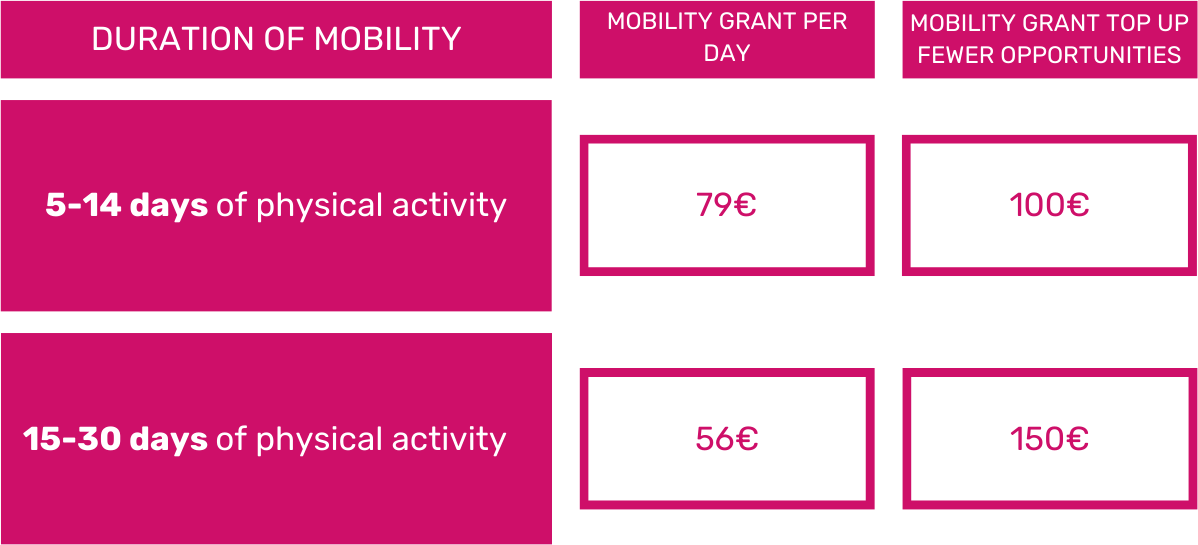
(Blended mobilities: 5–30 days)5–14 days of physical activity:
Grant per day: 79€ | Top-up fewer opportunities: 100€15–30 days of physical activity:
Grant per day: 56€ | Top-up fewer opportunities: 150€Additional Support Fewer Opportunities (Long-term): +€250 / month
Inclusion Support: Real costs coverage for participants requiring extra supportTravel Support Standard Travel: Up to 2 travel days (1 day before + 1 day after)
Green Travel: Up to 6 travel days (train, bus, carpooling – min. 51% low-emission transport)Important Rules 1. Travel days must directly precede or follow the mobility.
2. Keep all tickets, invoices, and fuel receipts.
3. Submit travel and mobility documents within 10 days after completion.
-
Individual support for long term mobilities – mobility lasting from 2 to 12 months:
Amount of grant depends on the country where the mobility will take place. Information about rates of grant for mobility to program countries:- Erasmus+ grant for students:
Receiving country group
Monthly grant
Group 1 – Higher cost of living
Austria, Belgium, Denmark, Finland, France, Iceland, Ireland, Liechtenstein, Luxembourg, Netherlands, Germany, Norway, Sweden, Italy
670 EUR Group 2 – Medium cost of living
Cyprus, Czech Republic, Estonia, Greece, Spain, Latvia, Malta, Portugal, Slovakia, Slovenia
670 EUR Group 3 – Lower cost of living
Bulgaria, Croatia, Lithuania, North Macedonia, Poland, Romania, Serbia, Turkey, Hungary
600 EUR - Erasmus+ grant for traineeship:
Receiving country group
Monthly grant
Group 1 – Higher cost of living
Austria, Belgium, Denmark, Finland, France, Iceland, Ireland, Liechtenstein, Luxembourg, Netherlands, Germany, Norway, Sweden, Italy
820 EUR Group 2 – Medium cost of living
Cyprus, Czech Republic, Estonia, Greece, Spain, Latvia, Malta, Portugal, Slovakia, Slovenia
820 EUR Group 3 – Lower cost of living
Bulgaria, Croatia, Lithuania, North Macedonia, Poland, Romania, Serbia, Turkey, Hungary
750 EUR Individual support for short term mobilities (blended-mobilities): for mobilities lasting from 5 days to 30 days:
Travel costs for participants
Individual support to participants with fewer opportunitiesMobility participants who will be qualified as fewer opportunities participants include:
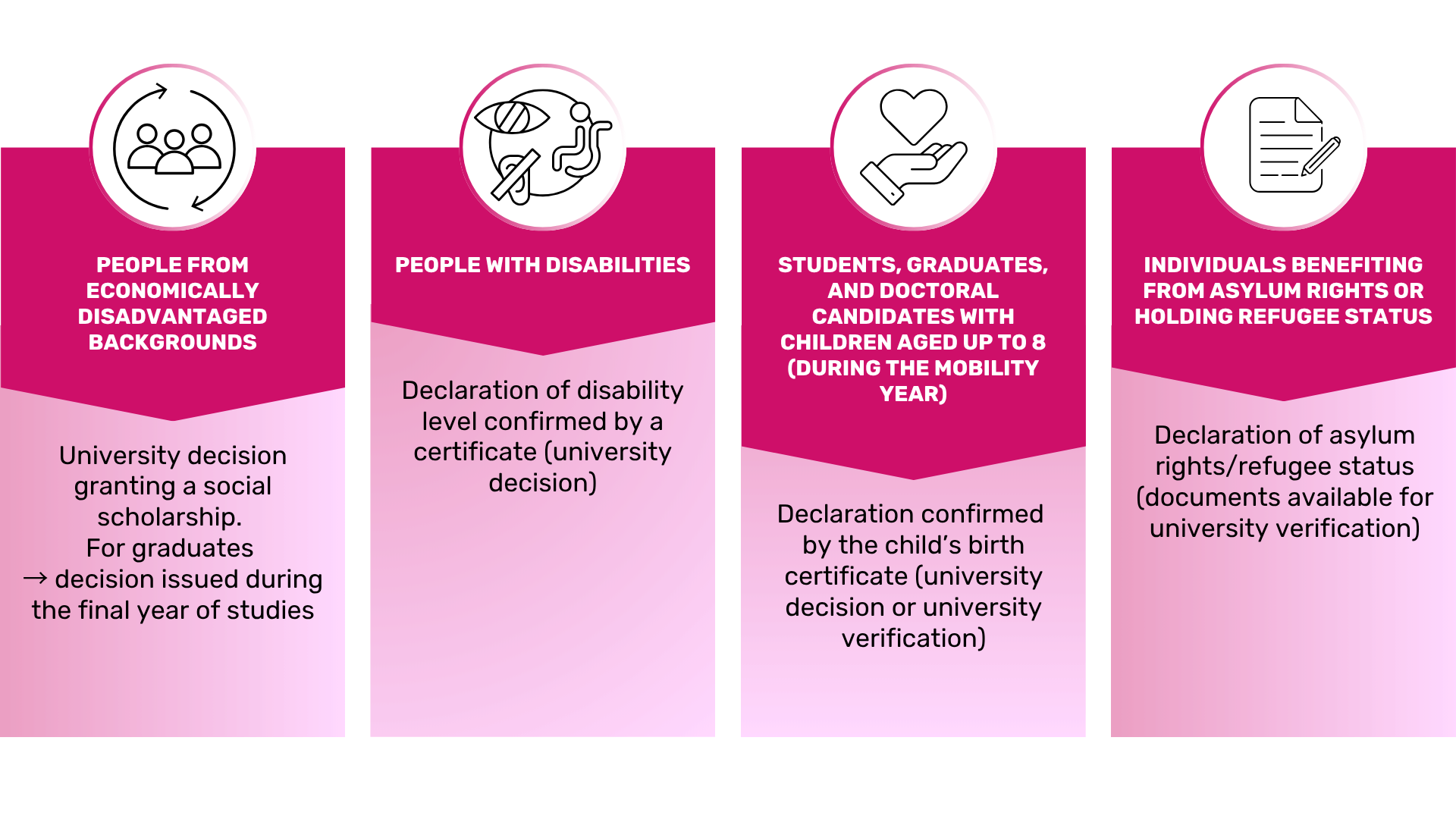
These groups of students are allowed to receive a top-up inclusion grant of 250 EUR per month as well as a travel support (in case of travelling for short-term mobility to EU country and non-EU country or in case of long-term mobility to non-EU country).
Inclusion grant
For mobility participants that come from disadvantaged groups e.g. disabled persons, there is a possibility to apply for additional support which is necessary in order to carry out their mobility abroad i.e. to cover the cost of stay and travel of personal assistant, purchase of specialized equipment to facilitate mobility etc. This is based on a special application form, submitted to Program National Agency by the Home University Coordinator, against the real costs that have been incurred by the mobility participant. More details regulating the payment of inclusion grant are available here.
Travel days - regulations
Students participating in Erasmus+ mobility may receive additional financial support to cover travel days, provided that these days are not included in the mobility period, i.e. they do not overlap with the activity dates specified in the Grant Agreement.
To determine the number of eligible travel days, each mobility participant is required to complete the Travel Days Declaration form, available in the "Documents to Download" section.
Only travel days taking place immediately before the start and immediately after the end of the mobility period are considered eligible. Travel days taken at any other time are not eligible for funding under the Erasmus+ Programme.
The number of funded travel days depends on the means of transport used:
Standard travel – up to 2 travel days (1 day before and 1 day after the mobility period).
Green travel – up to 6 travel days (due to the longer travel time associated with sustainable means of transport, such as train, bus, or carpooling).
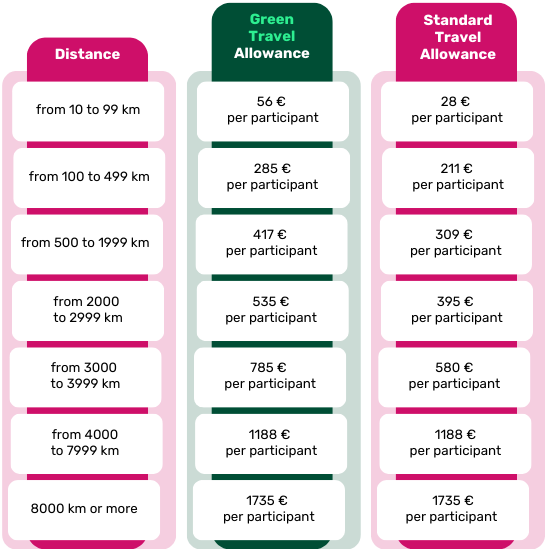
Participants who choose to travel using low-emission means of transport, such as a bus, train, or carpooling – a form of shared transportation in which at least two people travelling to the same university and for the same purpose share a car journey., may receive the Green Travel top-up (the amount of which depends on the distance to the host institution) as well as individual support for additional travel days (up to a maximum of 6 days).Eligibility for the Green Travel top-up must be confirmed by submitting a signed Green Travel Declaration, available in the "Documents to Download" section.
Participants are required to provide tickets, invoices, or fuel receipts to the Academic Mobility Coordinator no later than 10 days after the completion of their mobility period.
The use of low-emission means of transport for only one leg of the journey does not qualify the mobility as Green Travel and does not entitle the participant to the increased travel grant. To be recognised as Green Travel, at least 51% of the total journey must be completed using low-emission means of transport.
In accordance with Erasmus+ Programme guidelines, participants travelling to a host institution located within 499 km of the sending institution are expected, as a general rule, to use low-emission means of transport.
"Below 500 km, participants will, as a general rule, travel with low-emissions means of transport." (Erasmus+ Programme Guide 2024, p. 67).
-
Shortening of mobility and force majeure
Shortening the mobility may require the return of part or all of the grant received. Erasmus+ grant can be obtained only for the period that has actually been spent at a host university abroad, confirmed in writing by the host university. A student who has been staying physically at a host university for less than 2 months will be required to return the entire scholarship received. If the student starts their mobility 5 days before then initially planned date in LA or in the Erasmus grant contract or finishes their mobility up to 5 days after the initial end date, the amount of the grant received remains unchanged.
Please note that the minimum period of stay abroad required to claim an Erasmus grant is 2 months. Shortening the stay requires the return of a part of the scholarship, because the scholarship can be obtained only for the period actually spent at the partner university abroad (in accordance with the contract signed before departure and a certificate of stay brought from a host university).
Shortening of mobility – force majeure – in case a student undergoes a serious accident abroad or is seriously ill, it is possible to shorten the stay due to the so-called 'Force majeure' case which is independent of the student. In this case, the student should immediately contact the International Office (room 206).For more details about ‘Force majeure’ case, please read:
Extension of mobility
An extension of the mobility period (within the same academic year) is possible only if Akademia WSB has unallocated funds available within the Erasmus+ budget.
Students wishing to apply for a mobility extension must submit a request to the Academic Mobility Coordinator (gweglarz@wsb.edu.pl), including:
the exact dates of the planned extension period,
a justification for the extension request.
For study mobility extensions, the following documents must also be attached:a confirmation from the partner institution accepting the student for the following semester,
a proposed Online Learning Agreement (OLA) covering the extended mobility period.
The request must be submitted no later than one month before the end date of the current mobility period, in accordance with the provisions of the Grant Agreement.Please note: Requests that do not include the exact extension dates will not be considered. Providing the planned extension dates is mandatory when applying for additional funding.
Approval for a mobility extension may be withdrawn if the student fails to settle academic or financial obligations related to the previous semester of the mobility.
-
All Erasmus+ program participants (studies or traineeships) have the opportunity to complete a language proficiency test before their mobility and participate in online language courses available on the EU Academy platform.
The OLS (Online Linguistic Support) system was developed with Erasmus+ participants in mind to help them improve their language skills needed for undertaking a traineeship or studying abroad.
Participants going abroad under the Erasmus+ program can assess their language proficiency using the OLS system, which will help them evaluate the language they will use during their studies or traineeship and gain access to a personalized language learning path.
The language assessment before departure is optional for students participating in a mobility lasting at least 14 days. The aim is to ensure that students have mastered the language to the level recommended by the host organization. Exceptions are possible for individuals whose native language is the one in question or in duly justified cases. The results of the language assessment do not prevent participation in the Erasmus+ program.
Participants interested in improving their language skills can take part in online language courses before or during their stay abroad. Access to language courses includes various interactive and personalized training sessions. Participants can take language courses in any language available in the language support system.
-
Maximize your Erasmus+ Journey by logging in! Benefit from comprehensive guidance and information throughout your mobility — before, during, and after your exchange.
Discover a wealth of tips, stories, and exclusive deals from fellow students and organizations in public feed.
Brought to you by the European Commission as part of the European Student Card Initiative, the app simplifies administrative procedures, making your student mobility experience easy.