Programme
The agenda is constantly evolving. We will be announcing more presentations in the coming weeks.
09:00 – 10:25 Lectures, Part 1
09:00 – 09:10 Introduction to the Conference

Educator, Vice-Rector for Development, Director of the Center for Quality and Innovation at WSB University. She is a member of evaluation teams for international higher education accreditation institutions such as CEEMAN and ACEEU. A passionate advocate of modern teaching methods and the use of technology in adult education. At WSB University, she is responsible for digitalization and supporting the implementation of the “Digital AWSB” strategy.
9:10 – 9:45 Wisdom in a BANI World: Education and Human Development in the Age of Uncertainty and AI
This presentation will focus on the key challenges facing education and human development in a BANI world – a reality that is fragile, turbulent, nonlinear, and difficult to understand unequivocally.
The starting point will be a reflection on how uncertainty, turbulence, and growing complexity are changing the way we learn, make decisions, and try to understand the world around us. In such conditions, the following take on particular importance: sound judgment, critical thinking, cognitive resilience, responsibility, and the ability to navigate ambiguity.
An important context for the presentation will be artificial intelligence, which accelerates access to knowledge, supports analysis and development, and at the same time raises questions about the quality of human thinking, cognitive autonomy, trust in technology, and responsibility for decisions made with its support.
The reflection will center on the question of how to cultivate wisdom in such times – as a practical ability to understand complexity, ask relevant questions, recognize cognitive traps, and make more informed decisions in a world where technology increasingly influences education, development, and the way we interpret reality.

Business psychologist, executive coach, consultant, university lecturer, and author of development programs. For over 25 years, she has been supporting leaders, management teams, and organizations in the areas of leadership, talent management, potential development, decision psychology, and change.
As a lecturer in MBA and executive programs, she combines psychological, business, and academic perspectives. She designs original study programs and courses in the areas of personal and professional development psychology, leadership, psychological mentoring, coaching, and the development of future-oriented competencies. In her work, she pays particular attention to how people think, make decisions, develop, and build maturity in an increasingly complex world.
She collaborates with leading global corporations and Polish companies on projects related to talent management, the assessment and development of leadership potential, the evaluation of leadership competencies, the design of development paths, and supporting leaders through transformation processes. She facilitates development programs for management, mentoring programs, executive coaching, and workshops for leaders and teams.
She is the co-author, with Wojciech Żytkowiak-Wenzel, of the book "Leadership Update: The New Reality. Lessons for Leaders” (published by PWN), dedicated to updating thinking about leadership, potential, trust, and the development of leaders in a world of change. In her presentations and projects, she combines psychological knowledge, business practice, and reflection on the impact of new technologies - including artificial intelligence - on people, decisions, education, and organizations.
9:45 – 10:25 Mental Toughness – the key to developing young People/Students who can deal with the BANI world, creating resilience and positivity that, together, enable everyone to be the best version of themselves that they can be
The key to developing young people and students who can deal with the BANI world. It creates resilience and positivity that, together, enable everyone to become the best version of themselves.
Mental Toughness is a well-evidenced personality trait that describes a person's mental approach to adversity, change, challenge, and opportunity. We have always known that a resilient and positive approach to life and work is important, but until recently, it was not well understood what underpins this mindset. It is often described as an invisible quality. Through the concept of Mental Toughness, we can now understand it much better, making the invisible visible.
Using the MTQPlus, we are able to assess Mental Toughness with a high degree of confidence. This provides, for the first time, a solid platform from which everyone can develop. More than 1,000 peer-reviewed studies have shown correlations with wellbeing, performance, agility, and aspirations.
This helps to create self-awareness about how we approach life and its challenges, enabling individuals to optimise their journey through life and work.

Doug Strycharczyk is the CEO of AQR and for AQR International, which he founded in 1989 after a successful career in HR and Operations with global organisations.
Over the last 25 years. Doug has worked with Professors John Perry and Peter Clough to define mental toughness and to create the world’s leading measure of mental toughness. Doug is now recognised as a leading authority on the application of mental toughness to the world of work – particularly in education, coaching, and top team development. His work core interest is in helping individuals “to be the best they can be” whilst achieving this is a way that enhances well-being and a positive approach to life and all of its challenges.
He has co-authored several books on Mental Toughness, including "Developing Mental Toughness" the leading text on the subject.
Doug is frequently asked to speak at major events in Universities, Professional Associations and Businesses in the US, UK, Europe, Australia and the Middle East. Often introducing the concept of Mental Toughness as a source of thought leadership for the audience.
10:25 – 10:35 break
10:35 – 12:20 Lectures, Part 2
10:35 – 11:10 Educating for an Uncertain World: Developing Critical Thinking and Problem-Solving in Practice
How can institutions truly equip students for an uncertain and increasingly complex world? In this inspiring session, Dr. Sonia Gomez Puente explores how higher education can move beyond knowledge transmission to actively cultivate critical thinking and problem-solving as core competencies. She will discuss how these skills can be meaningfully embedded within curricula, teaching practices, and institutional strategies.
Moving beyond theory, the session brings practice to life through concrete examples, from innovative curriculum design and authentic learning tasks to cross-disciplinary initiatives and learning communities that stimulate curiosity, collaboration, and reflection. Participants will gain insight into how such approaches can empower students to become independent, reflective, and agile thinkers, capable of navigating real-world challenges.
Drawing on extensive experience in educational innovation and institutional change, Dr. Gomez Puente offers both fresh perspectives and actionable ideas. This talk is particularly relevant for educators, leaders, and policymakers seeking to strengthen the quality, relevance, and long-term impact of higher education in a rapidly changing world.
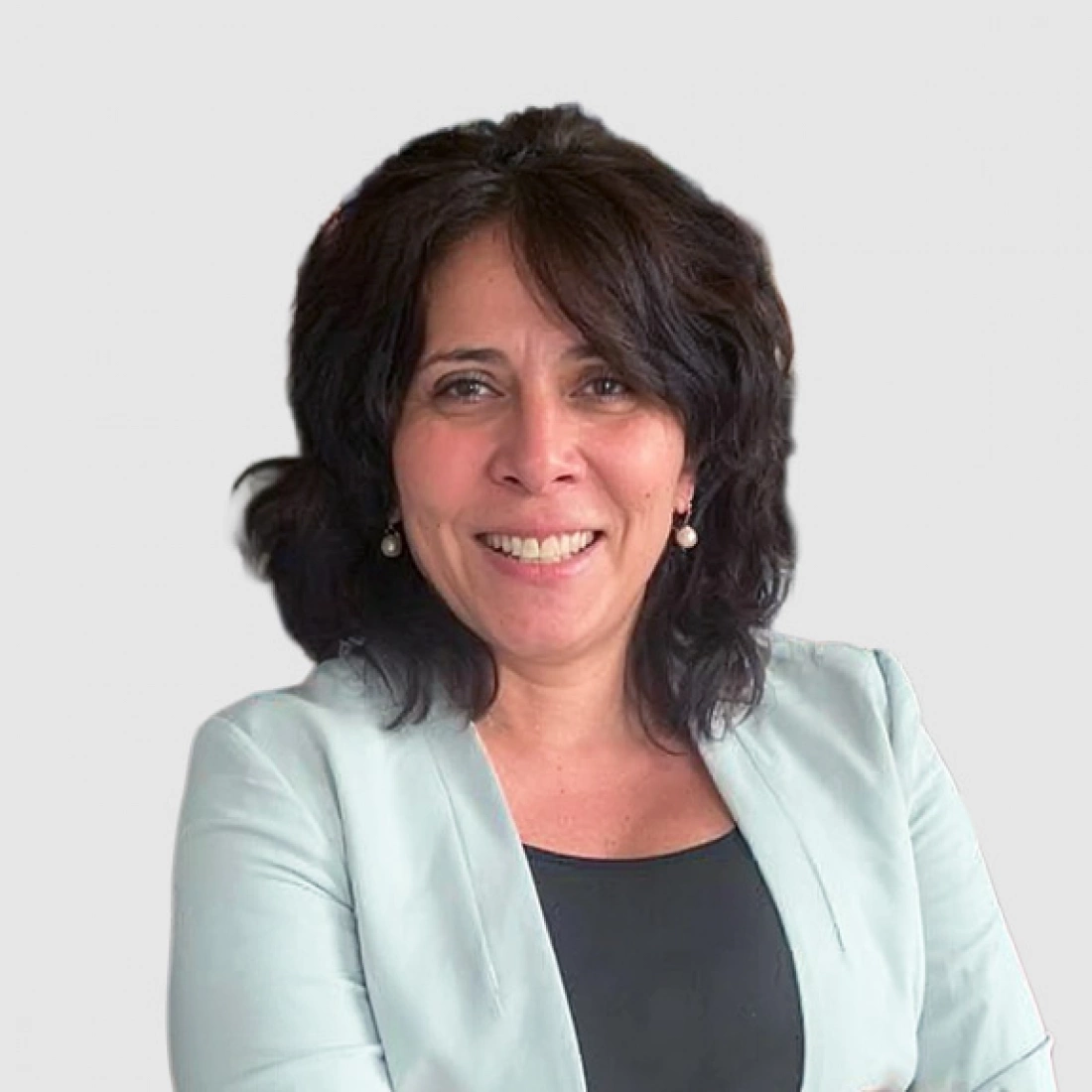
Works at Eindhoven University of Technology (TU/e) in the Netherlands already for 17 years. As Strategic Advisor in Innovations in Teaching & Learning, she manages programs at university and curriculum level. Sonia is the Program Manager of the TU/e Academy for Learning & Teaching and manages Challenge-based Learning activities and innovation projects across the university.
Sonia holds a PhD on education, and she is specialized in active learning methods (e.g. flip-the-classroom, Problem-based learning and Challenge-based learning, etc.) and has numerous publications as educational researcher in the field of engineering education. She has more than fifteen years’ experience in the design of development programs for teachers’ professionalization, projects and training courses on educational innovation. Sonia counts with broad international experience in educational projects in Europe, Africa and Latin American countries supporting universities in the field of curriculum development and in transforming education.
11:10 – 11:45 Fostering learning through passion-based co-creation in higher education
As educators, we want to equip our graduates with the capabilities they need to thrive and take part in solving the wicked challenges our societies currently face. This talk shares passion-based co-creation as a practical way to achieve this, referring to a pedagogical approach that combines project-based learning, creative freedom, personal initiative, and learning-by-doing. You will learn about concrete examples of passion-based co-creation in higher education, simple steps to get started, and ways to navigate typical hurdles.
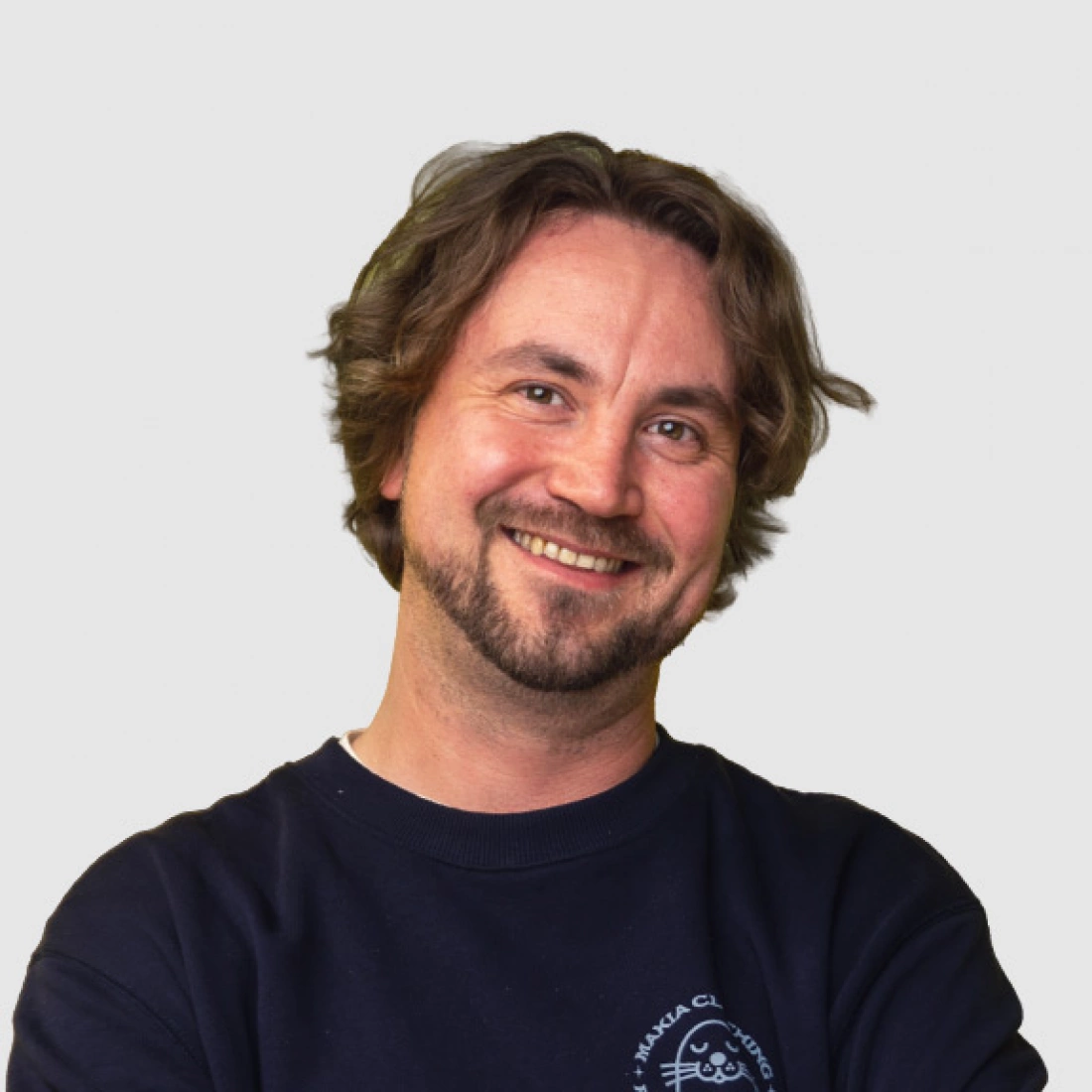
Dr. Tuomo Eloranta is a lecturer in product development at Aalto University's Design Factory.
For the past 10 years, he has been teaching and developing large-scale project-based courses in design thinking and innovation. With a priority on fostering creative and safe learning environments, Dr. Eloranta has coached over 70 student teams in product development projects at Aalto University and University of St. Gallen. In addition, he has a wealth of experience in supporting development initiatives in higher education and a research background in innovation and organizational change management.
Aalto University is among the most innovative universities in Europe and is recognized as a global leader in developing interdisciplinary educational approaches based on collaboration, project-based learning, and solving real-world challenges.
11:45 – 12:20 Building Creative Confidence: How to Teach Innovative Thinking Through Design Thinking
Foundations for Design Thinking – a programme offered by HPI d-school Potsdam and HPI d-school Afrika – teaches students from different academic levels (BA, MA, and PhD) and disciplines (ranging from IT and the humanities to the arts) how the Design Thinking process works and which tools are used throughout it.
However, the programme’s greatest impact comes from transforming the way participants think, developing their soft skills, and building their creative confidence. This includes teamwork, critical thinking, decision-making based on data interpretation, empathy, and collaboration with stakeholders. Understanding stakeholders’ needs is essential for creating solution prototypes that genuinely address their challenges and generate positive change.
This short presentation will share insights from working with students and explore how the programme’s design influences their development, learning experience, and growth as innovative problem-solvers.
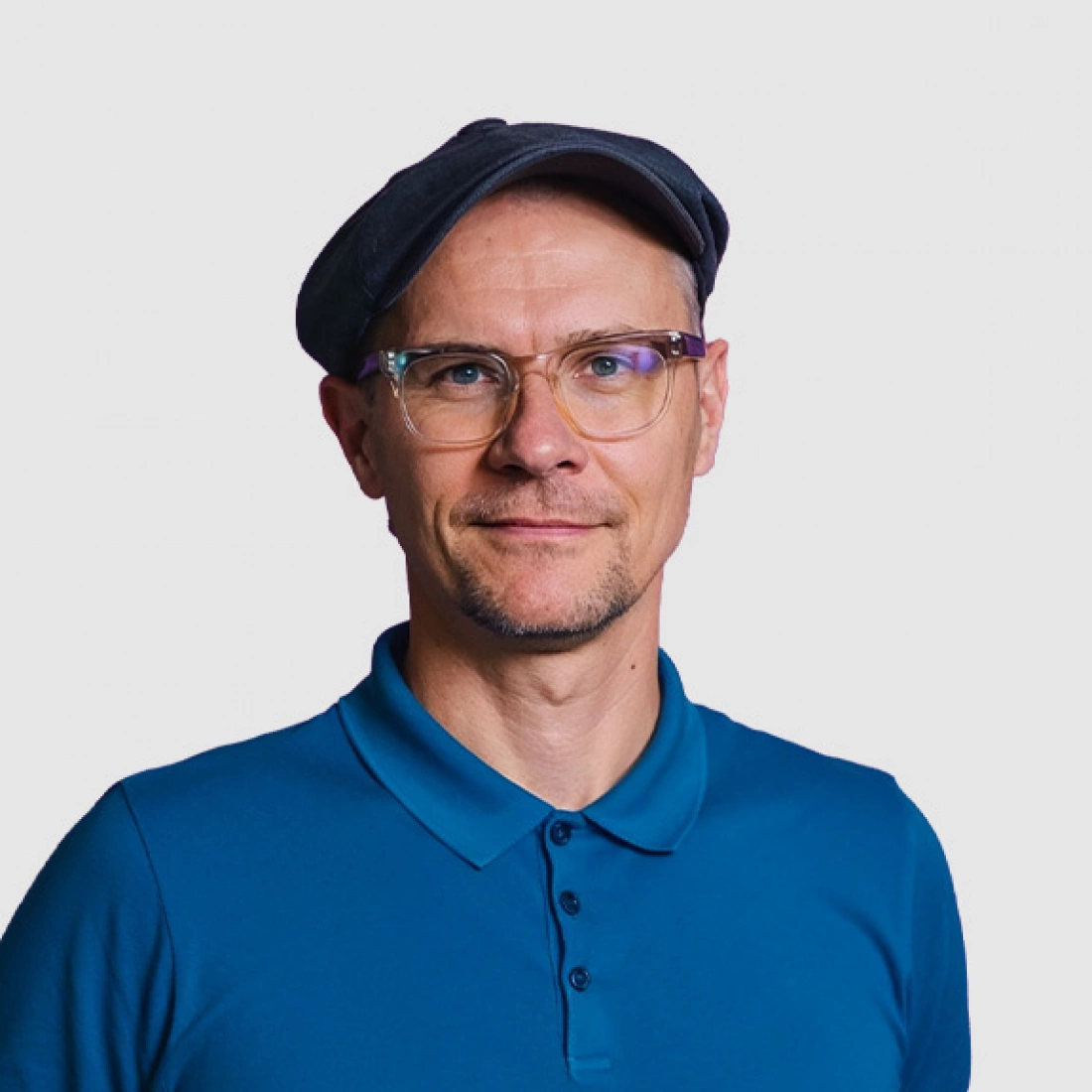
Łukasz comes from Kraków, Poland, but began his professional career abroad. He has lived and worked in various countries across Europe, North America, and Africa, collaborating with diverse groups of clients and stakeholders.
He holds a Bachelor's degree in Management Information Systems and an MBA from the University of Cape Town. Most of his professional career has been spent in the private sector, helping organisations automate business processes across industries such as telecommunications, banking, insurance, and e-commerce.
While working on large-scale transformation projects - including system implementations, digital transformation initiatives, and innovation programmes - he recognised the critical role of individual and organisational culture. He strongly believes that no transformation can succeed if it focuses solely on processes and technology while overlooking people. This conviction inspired him to further develop his expertise in human-centred change and development.
Łukasz is a certified Integral Coach. Since 2022, he has worked with d-school Afrika (Hasso Plattner Institute) as a Design Thinking Coach. From February 2024 to August 2026, he served as Program Lead at the Hasso Plattner Institute in Potsdam, supporting students and organisations in innovation and Design Thinking methodologies.
Since the summer of 2026, back in Poland, he has been focusing on implementing Design Thinking in business environments and fostering these competencies within the education sector.
12:20 - 12:30 break
12:30 - 14:15 Lectures, Part 3
12:30 - 13:05 From task execution to a partnership that supports our creativity. How to ensure that artificial intelligence supports critical thinking and stimulates academic discussions
The integration of AI systems into the academic environment need not serve solely to automate tasks or increase efficiency. Artificial intelligence can become a means of purposefully shaping students’ experiences by providing them with support in the learning process, while preserving their full agency, motivation, and engagement.
The presentation will outline the operational model and pedagogical outcomes developed during the international Advanced Creative Thinking and Communication program led by universities in Lithuania, Ireland, Portugal, and Austria. The presentation will discuss a proprietary approach to the creative process, defining four levels of human-AI interaction: from technology as a task executor and knowledge resource, through the role of co-creator, to that of a metacognitive partner who engages in Socratic dialogue with the student.
Participants will learn how this structure helps students develop unique higher-order competencies: critical thinking, intuition, and intentionality in decision-making. The findings presented demonstrate that the highest quality of education and the best results are achieved by students who become the directors and coordinators of their collaboration with AI, rather than mere consumers of generated content.

Head of AI for Higher Education in CEE & the Baltics at Google. He supports universities in the strategic implementation of artificial intelligence in teaching and research. In his work, he combines legal expertise with 20 years of academic experience, 14 years of experience in the EdTech sector, and his work as a senior consultant and executive coach for global organizations.
As a leader who has been recognized three times for the best HR projects in Poland, he ensures that, in the age of algorithms, people remain at the center of decision-making processes. He consistently implements a “human-in-the-lead” approach combined with the development of transparent policies for the use of AI in education, ensuring that technology enhances our potential.
He promotes the vision of an “AI-powered” university, where artificial intelligence personalizes learning and increases student engagement, and where faculty members - as mentors and architects of education - inspire students to grow and acquire knowledge, while effectively preparing them for the challenges of the modern job market.
13:05 – 13:40 Teaching discernment under conditions of digital persuasion: An AI-mediated student production project
Digital financial misinformation presents a particular educational difficulty because its persuasive force does not depend primarily on factual error. Cryptocurrency promotions and influencer-led investment content become credible through familiar online conventions that connect financial risk with identity, belonging and anticipated success. Factual correction therefore reaches only part of the problem.
This presentation examines a Nottingham Business School project in which postgraduate students used generative AI to produce 60-second music videos countering cryptocurrency scams for younger audiences. The task placed students inside the construction of persuasion. They had to decide how far evidence could be compressed without becoming misleading and when emotional appeal crossed into manipulation. They were also required to assume responsibility for material produced with AI.
Because these decisions were made collectively, disagreement became part of the learning process. Apparently straightforward choices about imagery, language and tone exposed different assumptions about credibility, audience vulnerability and acceptable influence.
The presentation argues that the educational significance of AI lies in the discernment organised around its use. It will explain how the activity was structured and what students learned by reconstructing the mechanisms through which digital influence operates. It will also consider how the approach can be adapted in other subject areas while preserving its central demand: students must communicate to a consequential audience and remain answerable for the claims they produce.
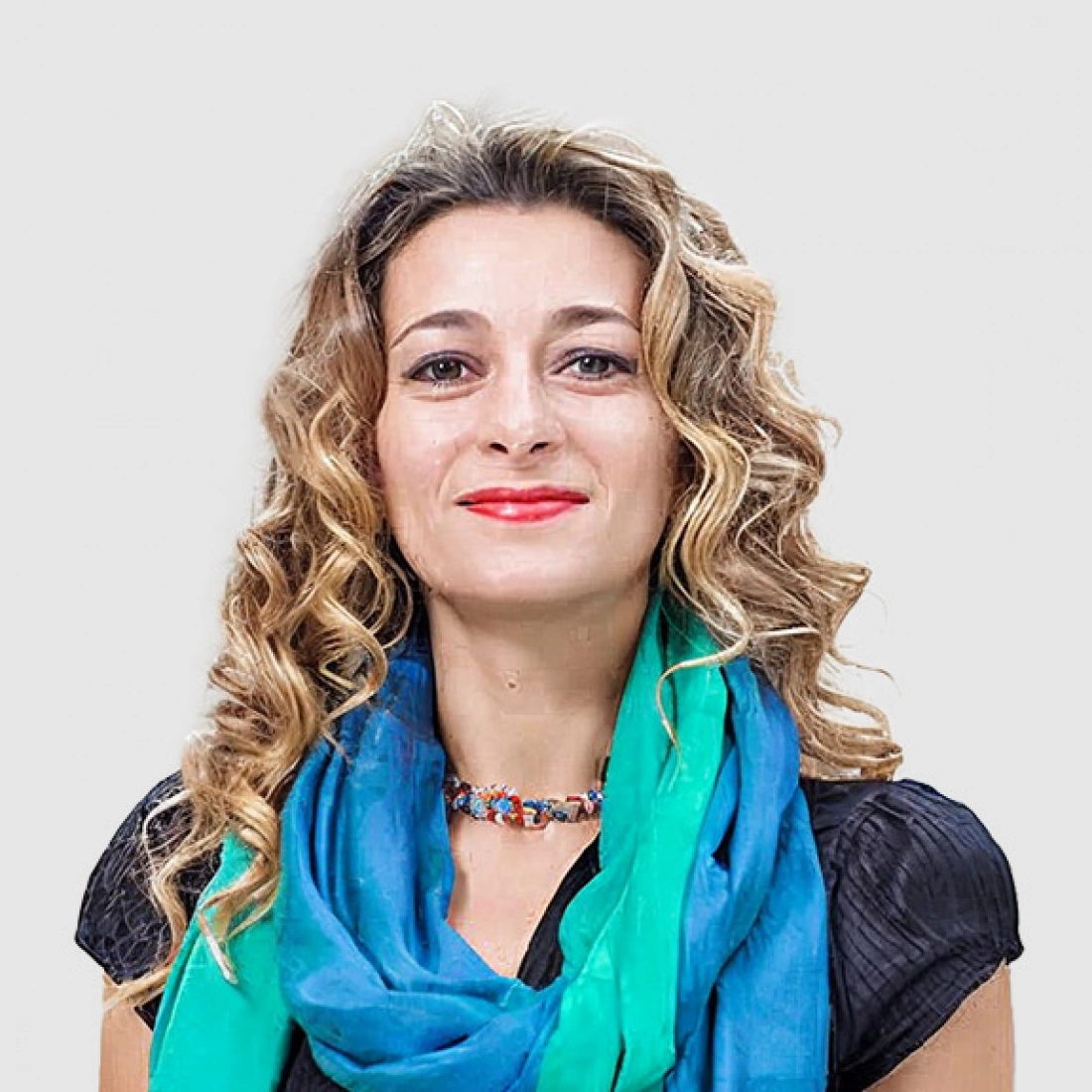
Ofelia Palermo is Associate Professor of Relational Leadership and Deputy Head of International at Nottingham Business School, Nottingham Trent University. She is a Principal Fellow of the Higher Education Academy. Her work focuses on relational leadership, responsible management education and international curriculum development. Her research examines leadership as a relational accomplishment shaped through interaction and everyday practice, with particular attention to how language influences responsibility and recognition within organisations.
13:40 – 14:15 How Can We Tell if Students Are Really Thinking? A Culture of Thinking as a Learning Methodology in an Uncertain World
In education, there is increasing talk of the need to develop critical thinking – especially in a world of uncertainty, rapid change, and the growing influence of artificial intelligence. The problem, however, is that simply saying “let’s develop critical thinking” is not enough. In teaching practice, it is very easy to confuse thinking with activity, a quick response, correct task completion, or the efficient recall of knowledge.
During this presentation, we will show how to shift the focus from the question “Does the student know the answer?” to the question “What is the student doing cognitively?” We will examine the signs that indicate a student is actually analyzing, interpreting, justifying, working with the material, considering different perspectives, and drawing conclusions. It is precisely these visible signs of thinking that allow us to better understand the quality of learning, not just the final outcome of the work.
The framework for this presentation will be the “culture of thinking” methodology, created and developed within Harvard University’s Project Zero. Its fundamental insight is simple: critical thinking is not fostered simply by telling students to “think critically,” but by designing conditions in which thinking has its place, structure, language, time, and meaning. Therefore, the presentation will include specific examples of how questions, assignments, work sequences, criteria, and feedback can support deeper thinking among students.
The goal of the lecture will be to demonstrate that critical thinking can become a tangible part of academic practice – not as an additional method or an attractive activity, but as a way of designing learning. In a world where it is becoming increasingly easy to find a correct-sounding answer, it is becoming more and more important for students to demonstrate how they think, how they understand, how they reason, and how they arrive at their own conclusions.

Critical thinking trainer, Certified Brain Coach, linguist, graduate of the English Language and Literature program at the University of Warsaw, and an English teacher with 18 years of experience. Co-founder and director of the Institute for Critical Thinking, responsible for the methodology and quality of training programs for trainers, teachers, and school principals. For many years, she has been training in critical thinking at the Foundation for Critical Thinking and Project Zero (Harvard University).

Critical thinking expert and trainer, creator of development programs for education and business. For over 20 years, he has been teaching people how to think more precisely, ask better questions, and make more informed decisions. He combines managerial experience with educational practice and tools from TOC, Harvard Project Zero, and the Foundation for Critical Thinking. Co-founder of Poland’s first critical thinking school and the Institute for Critical Thinking.
14:15 – 14:25 break
14:25 – 15:25 | Good Practices Session
Room numbers are listed below, next to the presentation topics.
The list of experts and practitioners will be updated. We will be introducing more people in the coming weeks.
14:25 – 14:55 Burnout or Growth? Mentoring as a Strategy for Supporting the Well-Being and Long-Term Motivation of Academic Teachers (Zoom 1)
Burnout among academic teachers rarely looks like a scene from a Netflix psychological drama. More often, it resembles a slow fading away, as a professor goes out to teach students, does their job, and returns home. On the surface, everything seems fine, but they have less and less energy for work, and at some point, they stop seeing any meaning in it. In my presentation, I will argue that it is neither a lack of funding nor the advent of AI that poses the greatest threat to the quality of education today.
The threat is something simpler and yet more difficult at the same time: the deeply rooted belief that an academic, having already established a certain position at the university (e.g., a Ph.D. or habilitation, leadership of a department, publication record, etc.), should be able to manage on their own. I draw on European data and on what I have observed over the years in my work as a mentor and tutor, both at Polish universities and abroad. I will show how mentoring for university faculty can cease to be merely a “support program” and instead become something that truly transforms the culture of an institution thanks to its potential to build relationships, pose important questions, and foster the reflection that follows. Relationships and specific questions.
For the past 13 years, I have been working at the intersection of two worlds: working one-on-one with students as a certified academic tutor and tutor supervisor, and serving as a mentor and trainer who conducts training sessions for academic staff. What happens in both of these relationships convinces me every day that the quality of education depends on the well-being of both parties involved in the educational encounter.
Professionally, I am affiliated with the University of Gdańsk as a lecturer in the Applied Linguistics program and a member of the Expert Team at the Center for Teaching Improvement and Tutoring under the Rector of the University of Gdańsk. I hold a Ph.D. in linguistics, a master’s degree in psychology, and certifications in tutoring and coaching. I have completed both levels of the Ministry of Education’s academic teaching development program “Masters of Teaching,” including the Train the Trainers track. I train, supervise, and mentor individuals in the field of education in Poland and the United Kingdom.
I believe that lasting change in the quality of education begins with the well-being and motivation of teachers and that good mentoring can bring about this change more effectively than most systemic reforms.
14:25 – 14:55 Between the Curriculum and the Student: Lean Management and Artificial Intelligence in Supporting the Quality of Education (Zoom 2)
Contemporary higher education operates in an environment marked by dynamic technological changes, rising student expectations, and the increasing complexity of teaching and organizational processes. In these conditions, the ability to identify activities that genuinely support the learning process - and to limit those that place an unnecessary burden on faculty and students – becomes particularly important.
This presentation will offer a process-oriented perspective on the design and implementation of education, inspired by experiences in the IT sector and the Lean Management approach. The starting point will be an analysis of the student’s journey - from the requirements outlined in the syllabus to the actual educational experience. Particular attention will be given to questions that help identify bottlenecks, delays, excessive communication, and other factors affecting the effectiveness of teaching processes.
The presentation will also cover examples of how artificial intelligence tools can support academic instructors in preparing teaching materials, communicating with students, organizing feedback, and carrying out selected administrative tasks.
The presentation will be practical in nature and will draw on experiences gained from working at the intersection of higher education, process design, and the IT sector. The examples presented will demonstrate how a process-oriented approach and the thoughtful use of AI tools can support the improvement of educational quality, increase the transparency of the students’ educational experience, and allow academic instructors to focus on activities with the greatest pedagogical value.
University professor, Agile project manager, trainer, and Lean Management expert.
She has been involved in higher education for over 20 years. She currently teaches at WSB Merito in Gdańsk and works as a trainer with Collegium Wratislaviense. She combines her experience as an academic instructor with practical expertise in project management, process design, and the implementation of modern solutions that support education.
She is the founder of the Akademia Rozwoju Nauczycieli brand, through which she conducts training sessions, development projects, and initiatives related to the use of artificial intelligence, project management, and process optimization. She specializes in transferring and adapting methods from the IT world to the educational environment, utilizing Agile, Scrum, Kanban, and Lean Management approaches.
Her interests center on the quality of education, the development of academic teachers’ teaching competencies, tutoring, and the practical use of AI tools in education. In her work, she seeks ways to combine experiences from the academic world, business, and new technologies to create more effective and engaging learning processes.
14:55 – 15:25 Process, Not Product: Active Learning in the Age of Artificial Intelligence (Zoom 1)
When a student can generate a polished essay, a market analysis, or a case solution in seconds – what exactly are we teaching, and why?
The answer lies not in blocking AI, but in redesigning learning around what AI cannot replace: the collective, reflective process of thinking. Drawing on practical experience with COIL (Collaborative Online International Learning), gamification, and active LMS design, the presentation offers the perspective of an educator building learning environments where the journey, not the output, is what counts.
We will explore how cross-border student collaboration creates cognitive friction that no prompt can shortcut; how game mechanics shift attention from "the right answer" to navigating uncertainty; and how LMS architecture can be deliberately designed to make the process visible, measurable, and assessable.
In a BANI world, critical thinking is not a competency we add at the end of a curriculum. It must be the structure of the learning experience itself. The presentation offers practical frameworks and honest reflections on what works, what fails, and what active pedagogy looks like when AI is already in the room.

Deputy Dean for Internationalization at WSB University, Poland. With over 15 years of experience in higher education, he specializes in Challenge-Based Learning, gamification, and active LMS design, methods he has developed and tested across four continents and international teaching appointments at Tashkent State Agrarian University (Uzbekistan), Politécnico do Porto (Portugal) and Paraná University (Brazil).
He has deepened his pedagogical professional development at CERN IdeaSquare (Geneva) Aalto University and Eindhoven University of Technology. His business simulation game Brick by Brick is used by partner universities across Europe.